Dancing Couple: A Craft Fair-Ready Embroidery Design
First Impression: Joyful, Approachable, and Instantly Recognizable
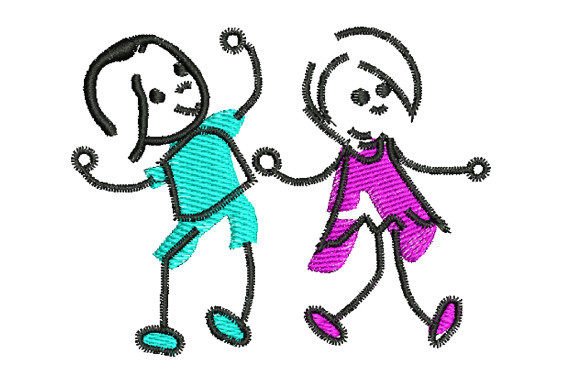
As an embroidery designer who’s prepped over 200 craft fair booths—from snowy holiday markets to sun-drenched spring bazaars—I immediately felt the warmth of Dancing Couple. It reads as cheerful, soft, and emotionally resonant—not overly romantic or clichéd, but genuinely joyful. That matters. At a craft fair, where shoppers glance for under three seconds per item, Dancing Couple lands with quiet confidence: it’s bold enough to catch the eye, cute without tipping into cutesy, and elegant without feeling stiff. It leans modern-farmhouse with a gentle Valentine S Day heartbeat—ideal for sellers who want seasonal relevance without locking into one day or demographic.
Where Dancing Couple Shines on Real Craft Fair Products
This design thrives where human connection is visible and tactile. On a natural linen tote bag? Perfect—centered above the pocket or scaled large across the front, it reads clearly from six feet away. As apron embroidery? It sings on the chest panel or lower bib, especially when paired with coordinating thread colors (navy blue + rose pink pop beautifully against oat or charcoal fabric). For tea towel embroidery, place it near the top hem or corner—it holds attention without overwhelming the utility of the piece. And as an embroidered patch? Dancing Couple is gift-ready: sewn onto denim jackets, canvas market bags, or even handmade pillow covers, it adds narrative charm that buyers love to share (“Look what I found!”).
It also works surprisingly well on curved surfaces—like structured caps—provided you use a medium-weight cutaway stabilizer and hoop carefully. On small pouches or zippered cosmetic cases, scale it down to 3–3.5 inches wide: the simplified figures retain legibility, and the color-coded joy (blue man, pink woman) remains intuitive. As a focal point for handmade gifts—think mini framed hoop art or stitched greeting cards—it feels personal, intentional, and boutique-worthy.
What Makes Dancing Couple Sell—Beyond the Stitch
Customers don’t buy embroidery files—they buy meaning, mood, and memory. Dancing Couple delivers that quietly: it symbolizes shared time, movement, partnership, and lightness. That emotional resonance translates directly to booth traffic. When placed beside more literal or text-heavy designs, it stands out for its visual calm and storytelling economy. Buyers pause. They smile. They pick it up. That’s gold at a craft fair.
For Etsy sellers and digital embroidery file shops, Dancing Couple is highly listable: it photographs cleanly on white and textured backgrounds alike, scales well in printable mockups, and pairs naturally with cohesive design assets (e.g., matching “Dancing Pair” tea towel + pouch + patch bundles). Its repeatable, balanced composition makes batch production efficient—no tricky re-hooping or excessive trimming between pieces.
Design Clarity & Practical Visibility Notes
- At-a-glance readability: Strong—even from across a crowded aisle. No tiny faces, no fine-line details that blur.
- Size flexibility: Works as both a small accent (1.75" wide on a patch) and a large statement (5.5" wide on a pillow cover).
- Photography performance: High contrast between blue and pink ensures crisp online listings, especially against neutral fabric backdrops.
- Batch-friendly rhythm: Symmetrical flow and consistent stitch density support smooth machine runs—fewer stops, fewer thread breaks.
Careful-Use Considerations for Handmade Production
While Dancing Couple is broadly forgiving, a few practical notes keep your finished product looking premium:
- Avoid ultra-dense stitching in tight curves—check the original embroidery file for overlapping fill areas; if present, reduce density slightly for towels or thick cottons.
- On textured tea towels or looped terry, use a tear-away + cutaway hybrid stabilizer to prevent puckering and preserve figure definition.
- Dark fabric demands high-contrast thread—confirm your blue and pink threads are vibrant enough not to mute on navy, charcoal, or black bases.
- Cap embroidery requires precise digitizing alignment—test the design on scrap cap material first, especially if the original file wasn’t optimized for curved surfaces.
- If scaling below 2", review legibility: arms, legs, and posture should remain distinct—not just blobs of color.
Designer-to-Designer Production Checklist
Before cutting fabric or loading your embroidery machine, run through these non-negotiables:
- Test the design on scrap fabric matching your final product (e.g., flour-sack cotton for tea towels, midweight twill for aprons).
- Verify thread contrast—especially on off-white or ecru fabrics where pale pinks may fade visually.
- Review spacing between figures and outer edges—tight margins cause trimming issues on patches or small pouches.
- Confirm hoop size compatibility with your machine and intended product (e.g., 4x4" for patches, 5x7" for tote bags).
- Inspect stitch density—overly dense fills risk stiffness on soft goods like pillow covers or lightweight totes.
- Choose stabilizer intentionally: cutaway for stretchy or unstable fabrics, tear-away for stable linens, fusible for appliqué-style patches.
- Create at least one real mockup—not just a digital preview—to assess drape, texture interaction, and perceived value.
- Compare thread colors across multiple fabric swatches—lighting changes everything.
- Confirm commercial licensing status before selling finished products—this is essential for Etsy sellers, boutique makers, and small shop owners using the embroidery file in resale items.
Final Thought: More Than a Valentine S Day Design—It’s a Year-Round Storyteller
Dancing Couple isn’t just another seasonal embroidery—it’s a versatile, emotionally intelligent machine embroidery design that elevates everyday handmade products. Whether stitched onto a market bag carried through summer festivals or framed as a wedding gift, it carries warmth without weight. For craft fair sellers, it’s booth-ready. For embroidery business owners, it’s scalable. For Etsy sellers and digital designers, it’s listable, bundle-friendly, and deeply human. In a sea of logos and slogans, Dancing Couple reminds us why people choose handmade: because it moves them—literally and emotionally.