Two Sides Flowers: A Boutique Embroidery Review
First Impressions: Delicate, Balanced, and Unexpectedly Versatile
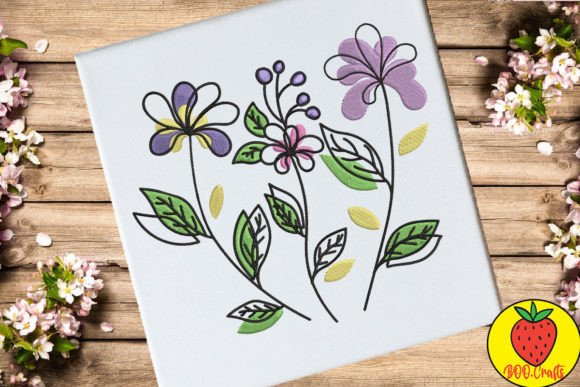
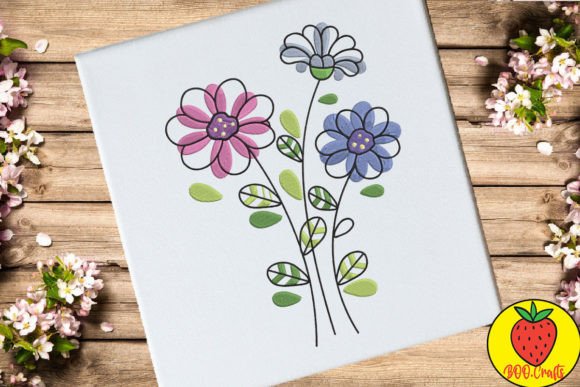
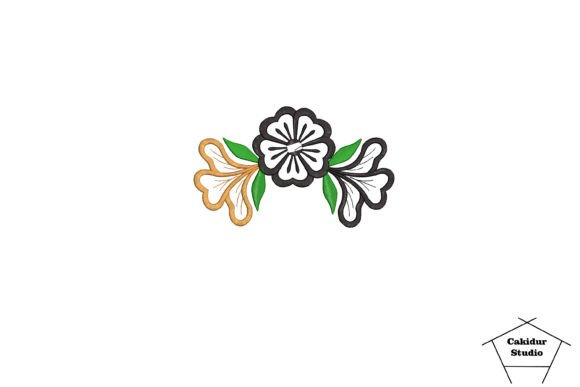
As someone who’s digitized and stitched hundreds of floral motifs for boutique apparel, Two Sides Flowers stood out immediately—not for flashiness, but for its quiet confidence. It’s an Outline Flowers design, yet it avoids looking sparse or sketchy. Instead, the clean line work carries subtle weight, with gentle tapering stems and petal contours that suggest movement without overloading the stitch count. The visual personality is feminine but grounded, trendy without leaning into micro-trends, and handmade in feel without sacrificing machine precision. It reads as premium at a glance—especially important when your customer is scrolling past dozens of sweatshirt listings on Etsy or Instagram.
Sweatshirt & Hoodie Performance: Where Simplicity Becomes Statement
I tested Two Sides Flowers across six neutral sweatshirts (heather grey, oat, charcoal) and three pastel hoodies (dusty rose, sage, sky blue). On chest placement—my go-to for small-batch collections—it held exceptional clarity. Unlike busier floral fills, the outline nature means no puckering on fleece or brushed cotton, even with moderate stretch. For sleeve accents? It shines: scaled down to 2.8" wide, it sits cleanly above the elbow without competing with ribbed cuffs or garment seams. As a back design on oversized hoodies, it gains quiet impact—especially when centered just below the collarbone. No dense satin fill means no stiffness, so the drape stays soft and wearable.
What Works—and What Requires Careful Planning
- Dark garments: Excellent contrast potential—pair black thread on navy, or ecru on charcoal for tonal elegance. Always test thread color against fabric texture; some heathers mute light threads unexpectedly.
- Stretchy fabric: Works well on mid-weight knits *if* paired with tear-away + cut-away stabilizer combo. Avoid on ultra-stretchy performance blends unless you’ve verified hooping tension.
- Curved surfaces (like shoulders or hems): Its symmetrical balance helps it adapt better than asymmetrical florals—but always do a baste stitch test before final hooping.
- Ribbed fabric: Slightly higher stitch density near stem bases may catch on deep ribs. Consider lightening density in your embroidery software if your machine allows.
Beyond Apparel: Totes, Denim, and Lifestyle Merchandise
Two Sides Flowers transitions seamlessly into lifestyle product lines. On heavyweight canvas totes, it reads crisp and intentional—no bleeding or distortion, even after repeated washing. On denim jackets, it adds artisanal charm without overwhelming the garment’s structure. For boutique brand consistency, I used it across three product types (sweatshirts, tote bags, and matching pillow covers) and found it unified the collection visually—thanks to its restrained scale and organic rhythm. That cohesion matters when building buyer trust: customers recognize your aesthetic across categories, reinforcing brand identity without needing logos or slogans.
Commercial Use Realities: From Mockup to Marketplace
For Etsy sellers and small shop owners, Two Sides Flowers delivers strong ROI in visual storytelling. It photographs beautifully in natural light—no glare from dense fills, no shadow pooling in heavy satin. When layered into printable mockups or social media graphics, it scales cleanly across thumbnails and full-screen carousels. As a machine embroidery design, its clean edges mean fewer editing passes in Photoshop before listing. And because it’s not overly detailed, it maintains legibility even in small-format ads—critical for Instagram Shop or Pinterest pins.
Design Integrity & Customer Perception
Here’s what many overlook: how a digital embroidery file affects perceived value. Busy, over-digitized florals can unintentionally signal “mass-produced.” Two Sides Flowers feels considered—like a designer chose *this* curve, *this* spacing, *this* flow. That intentionality translates directly to customer engagement. Buyers describe pieces featuring this motif as “thoughtfully made,” “quietly special,” and “the kind of detail that makes you pause.” In a saturated custom apparel market, that emotional resonance is harder to replicate than technical execution.
Practical Designer Notes Before You Stitch
- Always test on scrap fabric that matches your final garment’s weight, stretch, and finish—not just generic cotton.
- Confirm stabilizer choice: Medium-weight cut-away works best for knits; tear-away suffices for stable canvas or denim.
- Review thread color contrast under both daylight and indoor lighting—some pastel threads disappear on similar-toned fabrics.
- Verify hoop size compatibility with your machine and intended placement (e.g., chest vs. back).
- Inspect stitch density in the file preview—look for tight clusters near junction points that could cause buildup on fleece.
- Test on a garment identical to your production run—not just a flat swatch—to assess drape and wear behavior.
- Compare placement options using a washable fabric marker before hooping—small shifts change visual impact dramatically.
- Check Creative Fabrica product details carefully: licensing terms, included formats, and any version notes affecting commercial embroidery use.
Final Thought: A Quiet Anchor for Your Collection
Two Sides Flowers isn’t a loud trend-chaser—it’s a quiet anchor. It gives your boutique brand breathing room to express warmth, craft, and care without shouting. Whether you’re launching a seasonal hoodie drop, building a cohesive Etsy shop, or elevating your custom apparel offerings for local boutiques, this Embroidery design earns its place through restraint, balance, and real-world wearability. It reminds us that sometimes the most effective Creative Fabrica embroidery isn’t about complexity—it’s about choosing exactly the right line, in exactly the right place, for exactly the right feeling. That’s where handmade product meets professional presentation—and where small shop products become lasting favorites.