Multicolored Flower Border
First Impressions: Joyful, Balanced, and Ready for Real Fabric
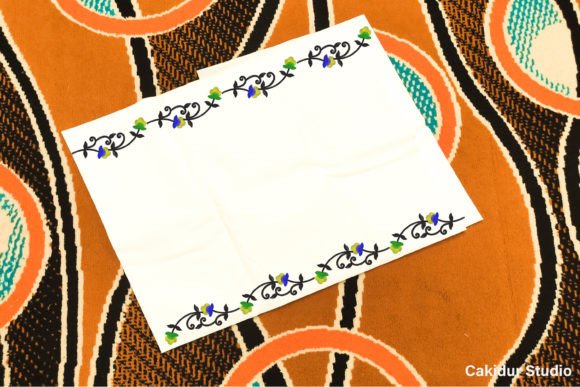
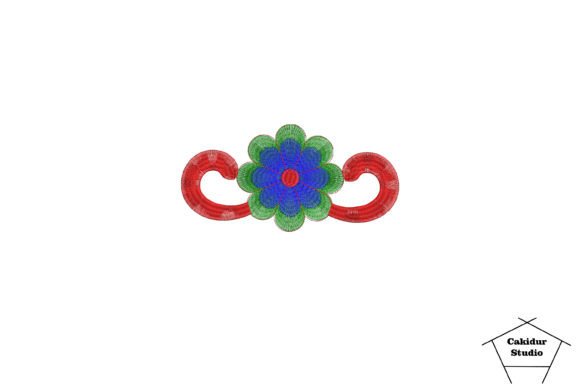
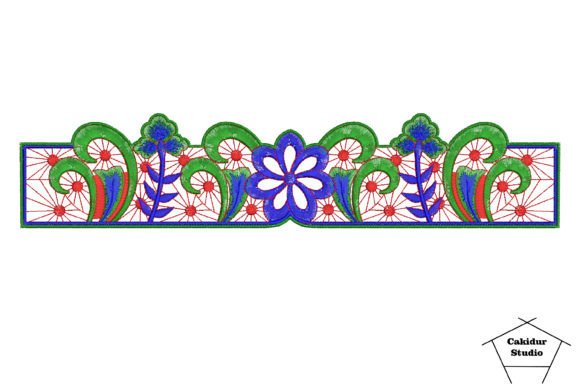
When I opened Multicolored Flower Border in my embroidery software, I didn’t see just another decorative frame—I saw a design with rhythm. The flowers aren’t identical clones; they’re varied in petal shape and bloom size, spaced with breathing room, and arranged along a gentle, organic curve. It feels hand-drawn—not stiff or overly symmetrical—and that’s rare in digital embroidery files. As a designer who’s stitched hundreds of borders for client projects, I immediately sensed its versatility: it’s cheerful enough for a baby onesie, refined enough for a linen tea towel, and bold enough to hold its own on a heavyweight tote bag.
A Real Project Test: Custom Embroidered Tote Bags for a Local Boutique
Last week, I used Multicolored Flower Border to edge three canvas tote bags for a small shop launching a spring collection. We placed it along the bottom hem—centered, 3.5 inches tall—with the flowers facing outward. On natural canvas, the color transitions (soft pinks, buttery yellows, sage greens) read clearly without oversaturation. Customers loved how it elevated a simple bag into something gift-ready—no extra tags or packaging needed. One buyer even asked if it was hand-embroidered. That’s the kind of impression this border makes: intentional, artisanal, quietly confident.
Where It Shines—and Where to Pause
Multicolored Flower Border performs beautifully on stable, medium-weight fabrics: cotton twill for aprons, terry cloth for kitchen towels, brushed poly-cotton for sweatshirts, and quilting cotton for pillow covers. Its moderate stitch density keeps things smooth—not so dense that it puckers thin fabric, not so sparse that details vanish on dark backgrounds.
- Custom apparel: Works well on crewneck sweatshirts and structured caps—but avoid placing it across curved seams or deep crown curves unless you’ve tested hooping first.
- Baby embroidery: Gentle colors and rounded shapes make it ideal for onesies and burp cloths, especially when stitched with soft, low-lint thread.
- Holiday & wedding gifts: Swap out one or two flower colors to match a palette—say, dusty blue and ivory for a baby shower, or cranberry and gold for holiday tea towels.
- Embroidered patch: Clean outer edges and consistent satin-stitch petals mean it presses flat and trims neatly. Just reinforce the back with lightweight fusible web before cutting.
Watch These Details Before You Stitch
This isn’t a “load-and-go” design—it rewards attention. Here’s what I check every time:
- Stabilizer choice: Use medium-weight cutaway for knits or stretchy fabric; tear-away works fine for stable wovens like linen or duck cloth.
- Thread color contrast: The design relies on subtle shifts between hues—not stark value differences—so test your thread palette on scrap fabric under natural light. A pale yellow may disappear on cream linen if your thread is too warm.
- Hoop size fit: Though not specified in the description, I recommend a minimum 5" x 7" hoop to preserve petal definition and prevent compression at the ends.
- Fabric texture: Avoid highly napped fabrics (like heavy fleece) or loosely woven gauze—the delicate fill stitches in the flower centers can snag or float.
- Wash durability: Since it uses mostly satin and fill stitch (not heavy appliqué), confirm your thread and stabilizer combo holds up through gentle machine washing—especially for baby items or kitchen linens.
What It Adds to Your Handmade Product—Beyond Pretty
As an Etsy seller and craft business owner, I judge embroidery designs not just by how they stitch, but by how they affect perception. Multicolored Flower Border subtly raises perceived value: customers associate thoughtful, balanced borders with care and craftsmanship. It signals that the item wasn’t mass-produced—it was considered, curated, finished with intention. That matters whether you’re pricing a $28 tea towel or a $95 personalized baby blanket.
It also supports brand consistency. Unlike busy all-over patterns, this border frames without overwhelming—leaving space for a small monogram, logo, or tagline nearby. And because it’s not tied to a specific season or trend (no snowflakes, no skulls, no slogans), it stays relevant year after year across product lines.
Designer Notes You’ll Actually Use
Before adding Multicolored Flower Border to your next project—or listing it as part of a digital embroidery bundle—do these five things:
- Run a test stitch on scrap fabric matching your final project’s weight and weave.
- Check how it looks in grayscale: if the flower shapes blur together, adjust thread contrast or simplify colors.
- Compare mockups on both light and dark backgrounds—you’ll spot visibility issues faster than on screen.
- Verify licensing terms if selling finished products or digital embroidery files. Not all borders are cleared for commercial embroidery or resale.
- Ask yourself: does this enhance the item’s function? A border on a baby bib should be soft and non-irritating; on a cap, it must sit flat across the curve. Multicolored Flower Border leans toward the former—but only your test stitch confirms it.
Final Thought: A Border That Feels Like a Signature
I don’t reach for Multicolored Flower Border when I need something loud or trendy. I use it when I want warmth, quiet confidence, and a handmade signature that customers feel before they even touch the fabric. It’s the kind of embroidery file that makes repeat buyers say, “I recognize your work.” For small shop owners, Etsy sellers, and custom apparel designers, that recognition is worth more than any single sale—it’s the start of a visual language you own.