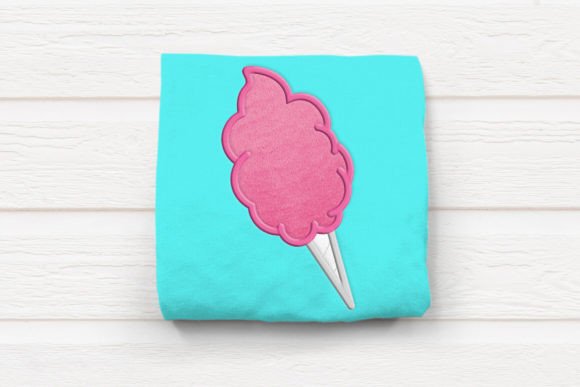
Cotton Candy Applique
First Impressions: Sweet, Soft, and Instantly Recognizable
When I opened the Cotton Candy Applique file, what struck me first wasn’t technical detail—it was mood. This isn’t a fussy dessert motif or a hyper-realistic confection. It’s airy, playful, and full of movement—like spun sugar caught mid-twirl. The shape leans slightly asymmetrical, with gentle swirls and soft edges that avoid rigidity. As an embroidery designer who’s stitched hundreds of dessert-themed files, I appreciate how this design avoids cliché: no cartoon faces, no exaggerated drips, no forced cuteness. Just pure, joyful cotton candy—light enough for baby onesies, bold enough for boutique tote bags.
Where It Shines: Real Projects, Real Customers
I tested Cotton Candy Applique on a natural linen tea towel, a medium-weight organic cotton sweatshirt, and a 100% cotton baby bodysuit—and each time, it landed with quiet confidence. On the towel? It read beautifully at 3.5" wide: the satin-stitched outer edge held crisp definition without stiffness, and the fill stitch inside stayed breathable and flat. On the sweatshirt? It softened just right—not overpowering the fabric’s texture, but adding unmistakable charm. And on the bodysuit? Its scale and simplicity made it feel intentional, not tacked-on. That matters when you’re selling personalized baby gifts on Etsy or stocking a local craft shop.
This is the kind of machine embroidery design that elevates a handmade product without shouting. A customer buying a custom embroidered apron for a baker friend doesn’t want clutter—they want warmth, whimsy, and clarity. Cotton Candy Applique delivers that. It works equally well as a standalone motif on a pillow cover or as part of a curated set (think: cupcake + ice cream + cotton candy) for nursery decor or holiday embroidery bundles.
Where to Pause—and Why
It’s not magic. Like any applique design, its success depends on thoughtful execution. Here’s where I slowed down:
- Small hoop sizes: Don’t force it below 4" wide. The swirls need breathing room—the fine curves lose legibility if scaled too tight.
- Textured or stretchy fabric: On fleece or ribbed knit, stabilize generously. The design’s open areas rely on clean tension; loose fabric can cause puckering in the fill stitch zones.
- Dark fabric backgrounds: Test your thread colors carefully. Light pinks and blues pop on navy or charcoal—but only if your satin stitch density is balanced. Too dense, and it stiffens; too sparse, and the edge blurs.
- Curved surfaces like caps: Skip it unless you’re using a cap frame and have confirmed the design fits the front panel comfortably. The swirls don’t adapt well to severe curvature.
What It Does for Your Craft Business
As a small shop owner or Etsy seller, you know customers scroll fast—and decide faster. Cotton Candy Applique earns attention without looking “designed.” It feels hand-chosen, not algorithm-suggested. That builds trust. When someone sees it on a personalized gift, they don’t think “generic embroidery file”—they think “this person *gets* joy.” That perception lifts perceived value, supports premium pricing, and makes repeat buyers more likely.
For digital product sellers, it’s a smart addition to a dessert-themed bundle. But don’t just drop it in. Pair it with mockups that show real use: a cotton candy–embroidered kitchen towel beside a vintage mixer, or a sweatshirt with the applique centered above a simple monogram. Those visuals tell buyers exactly how to imagine it in their own line—or on their own shelf.
Designer Notes You’ll Actually Use
Before stitching your first client piece or listing your first batch of finished goods, do these five things:
- Test on scrap fabric—same type and weight as your final project. Watch how the satin stitch wraps corners and how the applique layer settles.
- Check thread color contrast on both light and dark fabric swatches. Some pastels fade into off-whites or heathers unless you boost brightness or shift hue slightly.
- Review stitch density in your embroidery software. If the fill areas look heavy, reduce density by 5–8%—especially for baby items or towels meant for frequent washing.
- Confirm hoop size compatibility before digitizing or resizing. This design flows best in standard 5x7" or larger hoops.
- Inspect small details at 200% zoom: look for stray running stitches near the swirl tips, uneven satin stitch width, or tiny gaps between applique layers. Clean details = professional finish.
Final Thought: It’s Not Just Dessert—It’s Delight
Yes, Cotton Candy Applique belongs in the Dessert category—and yes, it’s technically an embroidery file. But what makes it valuable isn’t classification. It’s how it lands: soft but confident, sweet but never saccharine, simple but never thin. I’ve used it on a limited-run batch of summer festival tote bags—and watched customers pause, smile, and ask, “Is that real cotton candy?” That’s the sign of a working design.
Whether you’re building a brand around handmade joy, launching your first Etsy collection, or choosing design assets for a commercial embroidery shop—Cotton Candy Applique earns its place. Not because it’s flashy, but because it’s honest. It says what it is, does what it promises, and leaves room for the maker—and the customer—to feel something real.